
Understanding the Importance of Keyword Research
Let's kick things off: why is keyword research so crucial? If you're aiming to rank higher on search engines, you've got to know what people search for. Keywords aren't just words; they're insights into user intent. They bridge the gap between your content and your potential audience.
Consider this: when someone types a query into Google, how does Google decide which results to show first? It's primarily about relevance, and that's exactly what strong keywords provide. Without perfect keywords, your content is like a ship without a compass. It may wander, but it’s unlikely to reach its destination.
Top Keyword Research Tools for 2023
1. Google Keyword Planner
Google Keyword Planner is the old faithful of keyword research. It's extensive, offering search volume data directly from the source. But there’s a catch: it's mostly designed for advertisers. However, its robustness makes it a favorite for many businesses.
Using it is straightforward. Enter a seed keyword, and up pops related suggestions. You'll get average monthly searches and competition metrics. If you're involved in marketing, understanding these metrics is paramount. They help gauge the keyword's viability and align it with your AI content generation strategies.
2. SEMrush
Now, here’s where things get a little fancy. SEMrush isn't just a keyword tool; it's a digital Swiss Army knife. Besides offering deep dives into keyword difficulty, it reveals competitor strategies. You see what others rank for, and more importantly, why.
SEMrush’s standout feature? Its Keyword Magic Tool. This tool crafts keyword clusters based on specific themes. If you’re thinking long-term content strategy, that’s golden. Keywords need context. And context? Well, that’s where SEMrush excels.
3. Ahrefs
Ahrefs is another heavyweight. Like SEMrush, it offers a suite of tools beyond keyword research. Its strength? Backlink analysis. But let's not stray. In the keyword arena, Ahrefs shines with its “Keyword Explorer.”
Its data comes from ten search engines, not just Google. So, if you’re thinking global, Ahrefs is your buddy. The tool provides a parent topic metric, helping you target broader subjects. That’s invaluable, especially when looking to revolutionize your strategy with automated SEO tools.
Analyzing Features and Usability of Keyword Tools
You might be wondering, "Which features matter most?" There are a few key ones to look out for. Firstly, accuracy of data. You don’t want to plan based on dodgy metrics. Secondly, look for keyword difficulty scores. These give a quick look at how hard it'll be to rank for any given term.
Another important consideration is ease of use. No one wants to wade through jargon. Well-laid-out dashboards offer clarity and save time. Ahrefs’ intuitive interface, for example, ranks high here.
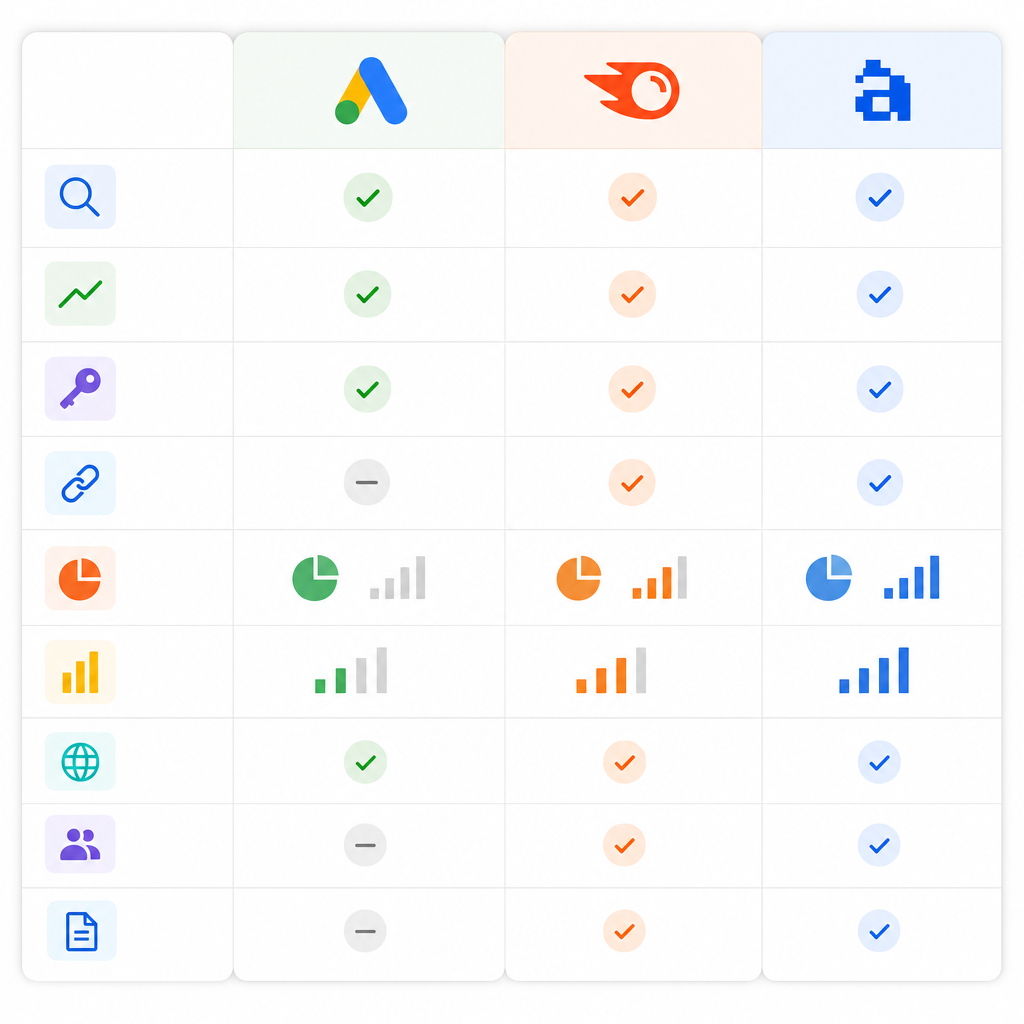
Finally, consider additional resources. Does the tool provide tutorials or support? Beginners need guidance. That's why some prefer Google Keyword Planner; it just feels more approachable for newly minted SEO warriors.
How to Choose the Right Tool For Your Needs
Choosing isn't easy, but start by assessing your goals. Are you doing deep dives into competitive analysis, or are you mainly producing content? For content-heavy operations, SEMrush or Ahrefs could be a good fit. If budget's an issue, start simple with Google's free tool.
Think about scope, too. Local businesses might need different solutions than enterprises targetting global audiences. And here’s a tip: try free trials. They're perfect for getting a feel of how the dashboard works and whether it aligns with your needs.
Actually, let me put that differently. Don't just trial these tools. Test them. Compare the data they provide on the same keyword. You'll be surprised at how differently tools can interpret the same data.
Best Practices: Using Keyword Tools Effectively
Start with Broad Terms
When diving in, start broad. Use one or two words and then narrow down. Maybe you're writing about digital marketing strategies. Start with "digital marketing" and let the tool unravel the possibilities.
Analyze Competitors
Never underestimate your competitors. Peek at their top keywords. SEMrush and Ahrefs do this superbly. You can understand why they rank where they do, and perhaps even top them.
Focus on Intent
It's not just about volume. Sometimes, low-volume keywords have high conversion potential. Why? Because they align well with user intent. High intent often equates to high value.
Regularly Update Your Strategy
The search landscape changes. What worked six months ago might not work now. Ensure your keyword tool of choice provides real-time data. Monthly SEO reports can be an invaluable aid in staying updated.
Conclusion
Keyword research tools are indispensable for anyone looking to optimize their online presence. Each tool comes with its own advantage, tailored to different needs. The key? Understand what you need, how you plan to execute it, and use the right tool. The world of SEO is an intricate dance, where tools like Google Keyword Planner, SEMrush, and Ahrefs are your partners. Choose wisely, and you won't just rank. You'll resonate.